Building resilient port ecosystems

Ports cannot afford to stand still

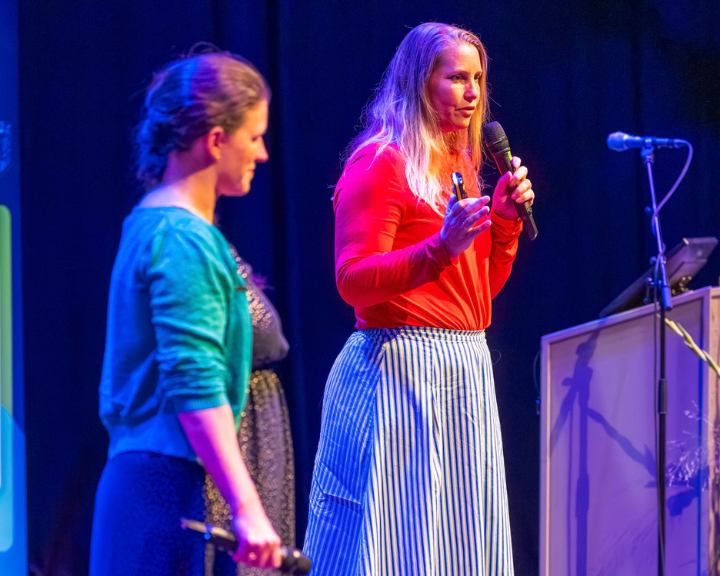
As climate risks are intensifying and energy security has never been so back on the European agenda, ports are under pressure to change. At our Ports in Transition conference, Eva Burm (PIONEERS) and Maaike Dalhuisen (MAGPIE) eloquently shared four lessons from five years of work on decarbonisation, digitalisation and innovation to help the ports decide their next steps. Here they are:

Europe is the fastest-warming continent on Earth, and ports are already feeling the consequences. Low water levels on the Rhine and Danube, drought affecting energy production, and geopolitical conflicts disrupting energy supplies show how closely European port operations are tied to wider environmental and political developments. Considering this, the case for change is clear. Luckily, ports are not starting from scratch. Innovation has long been part of their development, and their influence reaches well beyond their own boundaries; as key links in transport, energy and industry, they can help drive the transition on their own premises as well as across the wider economy.

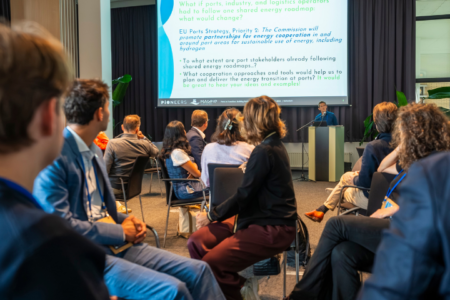
Eva and Maaike still polled the audience to test how far the energy transition had progressed in the public’s own organizations. Is decarbonisation a strategic priority of theirs? Did they have a transition plan in place? Are results already coming through? And will the port ecosystem be climate-neutral by 2050? The number of people who had to sit down as the two strategists put their questions to the room (with only one gentleman standing at the very end, out of the 200+ attendees) showed that, while ambition is there, much remains to be done. Volatile energy prices, energy dependence and the rapid development of artificial intelligence have only made the action case more compelling. That is why, drawing on five years of work, MAGPIE and PIONEERS identified four lessons for ports working towards a greener, smarter and more resilient future.
1. Every port is different

There is no universal blueprint for port transition. Each port has its own geography, infrastructure, industrial base, governance arrangements, and relationship with its city and region. Broad categories such as seaport versus inland port or annual throughput cannot capture all the factors that determine what is possible. Therefore, the starting point of any transition should be a thorough diagnosis of the port and its ecosystem. Carbon emissions and energy demand matter, but so does understanding how the port works in practice, who makes decisions, where constraints lie, and where collaboration can help. For this,  MAGPIE and PIONEERS brought together ports with different configurations and operating conditions, demonstrating why solutions need to be assessed in context rather than transferred wholesale from one location to another.

Understand your port before deciding how to change it.

2. No guts, no glory

A strategy is only useful if it leads to action. MAGPIE and PIONEERS used ports as test beds for new technologies and ways of working, learning from both successes and setbacks. Not every demonstration follows the original plan. MAGPIE had to adapt one of its demonstrations along the way. This is part of working with emerging technologies. Knowing when to adjust an approach, rethink a project, or stop an experiment is as important as getting it right. Ports need to make room for experimentation, commit the necessary resources, and create opportunities to scale successful pilots. They can also learn from one another, building on existing experience instead of duplicating work.

Experiment, learn from what does not work, and share those lessons with others.

3. We’re in this together

Even a successful technology can struggle to scale if the wider port ecosystem is not ready for it. Companies hesitate to invest when infrastructure is missing, while infrastructure providers hesitate when demand is uncertain. Both face the risk of investing in assets that could become obsolete. PIONEERS explored these interdependencies through a systems map covering around 250 factors influencing the transition to a climate-neutral port. The exercise showed why progress cannot depend on isolated decisions. Port authorities, terminal operators, energy providers, shipping companies and public authorities need to coordinate their plans and investments. Acting together can help create demand, share risks and give new technologies the scale they need. Port authorities can help make this happen by bringing stakeholders together and aligning their efforts.

Build coalitions that reduce risk and make investment more credible. The first mover does not have to move alone.

4. Act now or pay later

The cost of transition is often the first thing we consider. The cost of doing nothing receives far less attention. For ports facing competing investment priorities, postponing decarbonisation or climate adaptation can seem like the safer option. But delays also carry costs, from exposure to climate hazards and volatile energy prices to infrastructure that may no longer meet future needs. PIONEERS explored possible climate-neutral port futures through four scenarios and a dedicated film. Such exercises cannot predict exactly what lies ahead, but they can help ports consider different futures and make decisions that remain relevant as conditions change.

Not every port can transform its operations overnight. But every step counts, whether it involves major infrastructure investment or a smaller change that enables further progress.

From lessons to action

Five years of MAGPIE and PIONEERS have not produced a single formula for the climate-neutral, smart and resilient port. The transition involves too many stakeholders, interdependencies and local constraints for one technology or intervention to provide the answer. Progress requires people prepared to keep moving forward, alongside a clear plan that connects individual initiatives to a wider direction. Port authorities can help orchestrate change across their ecosystems, aligning investments and priorities beyond the port itself.

MAGPIE and PIONEERS have developed approaches and resources to help ports assess their circumstances and build strategies suited to their needs. Their experience was also explored in the Learning Labs at Ports in Transition, where participants examined the practical challenges of turning ambition into implementation.

The message from Eva and Maaike was simple: understand your port, be prepared to experiment, coordinate with others, and account for the cost of delay.

The transition is already under way. The question is how quickly ports can turn what has been learned into action.

 
Share
Share on linkedin
Share on facebook
Share on twitter
Share on email
Introducing the Green Innovation Compass
What lessons should we remember from MAGPIE? What is our legacy? All of them! But more seriously, one of the main lessons from MAGPIE,...
Five Learning Labs, five lessons
The following is an AI-generated summary of the five Learning Labs held during the “Ports in Transition” conference of the MAGPIE and PIONEERS projects...
MAGPIE at the Connecting Europe Days: from pilot to legacy
MAGPIE joined the Connecting Europe Days in Brussels alongside PIONEERS Ports, bringing the project’s work on greener, smarter and more efficient ports to the European...
X