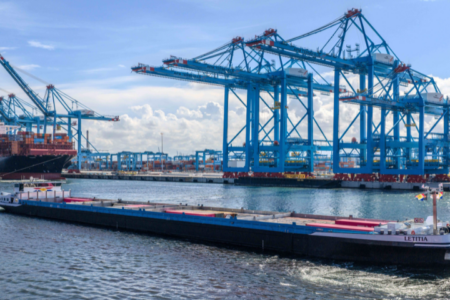
DeltaPort is an inland port network located along the River Rhine in the cities of Wesel and Voerde, in the federal state of North Rhine-Westphalia, Germany. As one of the four ports participating in the MAGPIE project (sMArt Green Ports as Integrated Efficient multimodal hubs), DeltaPort contributes its expertise in sustainable logistics and multimodal transport solutions.
A key focus of DeltaPort within the project is the promotion of modal shift concepts, encouraging the use of inland waterways and rail transport as environmentally friendly alternatives to road freight transport. Furthermore, DeltaPort provides valuable knowledge in the fields of sustainability, decarbonization, and the integration of alternative fuels, particularly hydrogen, into port and logistics operations.
DeltaPort also plays an active role in the development of the MAGPIE Master Plan, which aims to support ports across Europe in their transition towards net-zero emissions by providing strategic guidance, best practices, and innovative solutions for sustainable port development.
From DeltaPort’s perspective, MAGPIE has been a very exciting and rewarding journey. As this was our first participation in a large international and EU-funded project, it presented a completely new challenge for our organization.
At the beginning, one of the main tasks was to understand the project structure and the collaboration processes among more than 40 project partners from different countries and sectors. As a relatively small organization with a team of only 16 employees, we had to quickly familiarize ourselves with the various work packages and identify where we could contribute most effectively.
Over the past four and a half years, we have actively contributed to the development of project outputs, demonstrations, and tools, while sharing our expertise in multimodal transport, sustainability, and alternative fuels. Of course, balancing the project activities with our daily operational responsibilities was sometimes challenging.
Looking back, we are very proud of what we have achieved together. MAGPIE has not only strengthened our international network and expertise, but has also provided valuable insights, strategies, and practical solutions that support DeltaPort in becoming an even greener and more sustainable port network in the future.
• The fellow ports were expected to provide operational data and feedback throughout the project. Could you elaborate on a few concrete examples of your support during the project and its results for DeltaPort?
As a landlord port, DeltaPort does not conduct cargo handling operations itself. These activities are carried out by the companies located within our port areas. However, DeltaPort maintains very close relationships with its tenants and logistics partners, all of them are actively pursuing their own sustainability and decarbonization goals
Within the MAGPIE project, DeltaPort acted as an important intermediary between the project consortium and the companies operating in the port. For example, we collected and provided operational data related to energy consumption, infrastructure, and the level of digitalization within port-based companies. This information contributed to various analyses, assessments, and tools developed throughout the project.
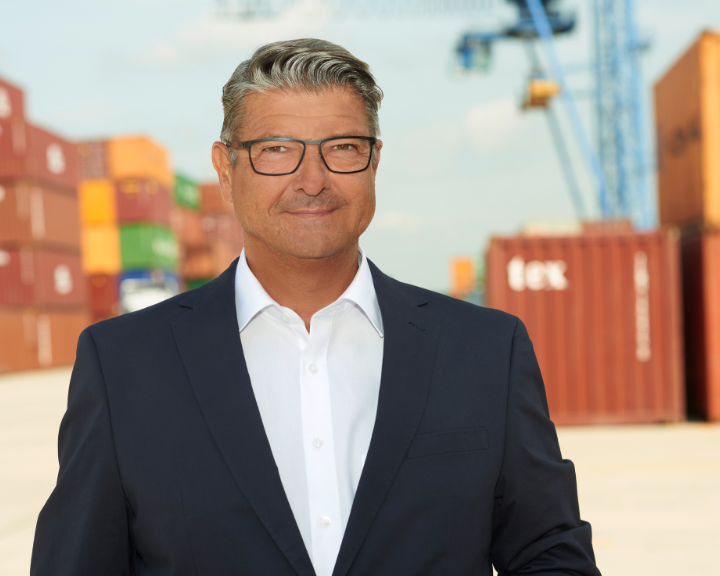
In addition to providing data, DeltaPort contributed extensive practical experience and sector knowledge. As Managing Director, I, Andreas Stolte, have spent more than 40 years working in the port and inland waterway sector, and I also grew up on an inland vessel. This background allowed me to contribute practical insights on topics such as modal shift concepts, the promotion of inland waterway transport and rail as sustainable alternatives to road transport, digitalization in logistics chains, and the implementation of alternative fuels, particularly hydrogen.
One particularly tangible outcome of our involvement was the development of the “MAGPIE-NRW” modal shift concept in close cooperation with our project partner Planco. The objective of this concept is to reduce congestion in the Ruhr metropolitan area by shifting freight transport from road to inland waterways and rail. We are especially pleased that this concept has moved beyond the planning stage and is already being actively implemented.
• From your point of view, what are the key challenges in the implementation of the innovations developed in MAGPIE?
From my point of view, one of the key challenges in implementing the innovations developed within MAGPIE is ensuring their economic viability. Many of the technologies and solutions that support the transition towards greener and more sustainable ports require significant investments. For companies and port operators, these innovations must not only deliver environmental benefits but also be economically feasible in the long term.
Another challenge is the regulatory framework. In some areas, regulations and standards are still evolving, particularly when it comes to alternative fuels, hydrogen applications, and new digital solutions. Clear and harmonized regulations across Europe are essential to provide planning certainty and accelerate implementation.
This is exactly why it is so important that the collaboration does not end with the completion of the MAGPIE project. The innovations, concepts, and tools developed during the project should continue to be refined and promoted at the European level. Ongoing cooperation between ports, industry, policymakers, and research institutions will be crucial to overcome remaining barriers and ensure the successful large-scale deployment of these solutions across Europe.
I believe that the outcomes of MAGPIE have significant potential to accelerate sustainable development not only at DeltaPort, but also at other inland and seaports across Germany and Europe.
One of the major strengths of the project is that its results are based on sound scientific research and have been validated through practical demonstrations and pilot implementations. In addition, the project brought together renowned companies, ports, research institutions, and technology providers, ensuring that the developed solutions are both innovative and applicable in real-world operations.
The next important step is to ensure that these results are effectively communicated and widely disseminated. Many ports face similar challenges regarding decarbonization, digitalization, and modal shift. By sharing the knowledge, tools, and best practices generated within MAGPIE, other ports can benefit from the experiences already gained and accelerate their own transformation processes.
For DeltaPort, it is clear that the insights and outcomes of MAGPIE will be incorporated into our future port strategy. The project has provided valuable guidance on how to become more sustainable, more innovative, and ultimately more competitive. We see sustainability not only as an environmental responsibility but also as a key factor for maintaining the attractiveness and long-term success of inland ports in an increasingly competitive logistics market.
• As the MAGPIE project is coming to an end, what are your reflections on the evolving role of port authorities in the energy transition? How can they ensure that the lessons and tools developed by MAGPIE are implemented and scaled? (e.g. Submission of a Masterplan on Smart Green Port of the future to the European Commission; policy advice for European ports).
The role of port authorities is evolving significantly in the course of the energy transition progresses. Today, ports are no longer just providers of infrastructure; they are becoming facilitators, coordinators, and innovation hubs that bring together industry, logistics providers, energy companies, and public authorities to drive sustainable transformation.
From DeltaPort’s perspective, port authorities have a responsibility to create the right framework conditions for the adoption of new technologies, alternative fuels, digital solutions, and more sustainable transport concepts. They can act as catalysts by connecting stakeholders, supporting pilot projects, and encouraging investments that contribute to decarbonization.
To ensure that the innovations and tools developed within MAGPIE are implemented and scaled, it is essential that the project outcomes continue to be promoted and integrated into European policy and strategic planning. One important achievement in this regard is the development of the MAGPIE Master Plan for the Smart Green Port of the Future, which provides practical guidance for ports on their path towards net-zero emissions. The submission of this Master Plan to the European Commission creates an opportunity to translate the project’s findings into long-term European port and transport policies.
In addition, the policy recommendations developed throughout the project can help create harmonized regulatory frameworks and investment conditions that enable ports of all sizes to adopt innovative solutions. Continued cooperation between ports, industry, research institutions, and policymakers will be essential to ensure that the knowledge generated by MAGPIE is not lost but instead becomes a foundation for the next generation of sustainable European ports. For DeltaPort, the end of the project is therefore not the end of the journey. Rather, it marks the beginning of the next phase: turning the knowledge, concepts, and partnerships developed within MAGPIE into concrete actions that support a greener, smarter, and more resilient port sector.