After Sines, DeltaPort and HAROPA, it only made sense to turn to MAGPIE’s lighthouse port, Rotterdam, for our last interview of MAGPIE ports. In the following, Boudewijn Siemons, CEO of the Port of Rotterdam, reflects on five years of MAGPIE, what the project has demonstrated, and what needs to happen next to move from pilots to wider implementation across European ports.

Why does MAGPIE matter?
MAGPIE shows how European climate and innovation ambitions can be translated into practical solutions inside real, operational ports. Rotterdam has acted as the lighthouse port, but the project brings together 44 partners, including the ports of Sines, HAROPA and DeltaPort, as well as industrial companies, technology providers and knowledge institutions.
Together, we have worked on alternative fuels, electrification, autonomous transport, digital tools and the efficiency of logistics. Every European port has to decarbonize, digitalize and strengthen its resilience, although each port starts from a different position. The value of MAGPIE are the learnings about what works, what doesn’t and what is needed to implement these solutions elsewhere in Europe.
What has been MAGPIE’s most important impact?
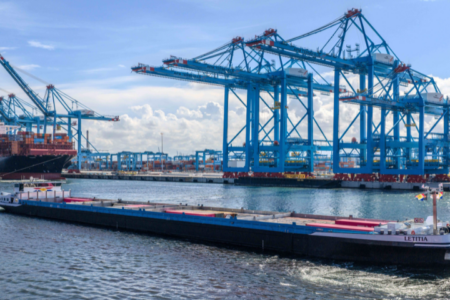
MAGPIE has moved innovation from presentations and ambitions into real port operations. In April 2025, for example, 800 cubic metres of refrigerated liquid ammonia were transferred from one vessel to another. The operation took 2.5 hours and validated Rotterdam’s safety framework for future ammonia bunkering. MAGPIE also demonstrated green connected trucking, developed digital tools for energy matching and greenhouse-gas calculations, and showed that an inland vessel can sail autonomously through a busy port, including undocking, navigating and docking.
These are tangible steps. They create practical knowledge for companies, regulators and other ports, while also revealing which technical, regulatory and commercial barriers still need to be addressed.
What is your favorite MAGPIE project?
My favorite is the ammonia bunkering pilot. It was a first-of-its-kind, full-scale demonstration at a global level. This project required special equipment, risk assessments, permits, and emergency procedures, involving environmental and safety authorities and a number of companies. The pilot demonstrated that ammonia bunkering can be conducted safely, while also identifying practical issues such as hose clearing and the need for ammonia-specific equipment. That is precisely what MAGPIE was set up for: turn plans into tested, usable knowledge.
What have the demonstrations taught us?
Innovation is rarely a straight line. A solution described in a proposal five years ago will almost inevitably need to adapt as technology, markets, regulation and partners develop and change.
A successful demonstration proves that technology can work. But a demonstration can be equally valuable when it identifies the missing regulation, infrastructure, financing or equipment. The essential point is that these lessons are used to create better conditions for the next implementation.
“MAGPIE has turned plans into tested, usable knowledge”
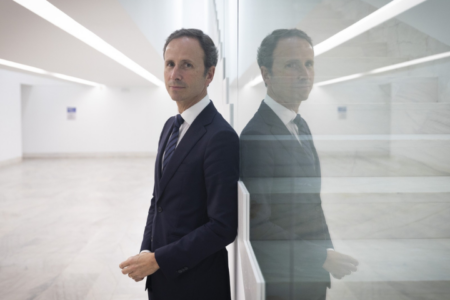
Boudewijn Siemons, CEO of the Port of Rotterdam
What role should ports play going forward?
Ports should increasingly act as implementation platforms for Europe’s industrial, energy and digital transition. Ports should also create real testing environments and first-customer opportunities for European startups and scale-ups. Large ports such as Rotterdam have the scale, infrastructure, industrial clusters and operational complexity needed to test complex innovations. But Europe needs more than a few front runner ports. Smaller and medium-sized ports must also be able to implement proven solutions. Their circumstances will be different. The role of leading ports should include sharing knowledge and helping build replicable approaches, while each port translates those approaches into its own context. Stronger cooperation between ports can substantially accelerate implementation.
How does this strengthen Europe’s competitiveness?
Europe’s competitiveness depends on its ability to convert innovation into operational technologies, companies, infrastructure and new markets. MAGPIE creates environments in which European startups, scale-ups and technology providers can test solutions with real users and regulators. The ammonia pilot produced practical guidance that ports and industry can use worldwide. Elements developed during the autonomous-shipping demonstration are already being incorporated into commercial assistance products for inland vessels. The digital tools developed within MAGPIE can support better energy matching, greener logistics and more informed investment decisions.
Going forward, we must ensure that European startups and scale-ups can use port ecosystems to validate their technologies, secure customers and scale internationally while remaining anchored in Europe. Ports can create early markets and launch customers for strategically important technologies. That strengthens Europe’s energy resilience, industrial base and technological independence, rather than allowing valuable innovations to leave Europe before reaching scale.
What should MAGPIE’s legacy become?
MAGPIE’s legacy should not be a collection of final reports. It should become a shared European capacity to implement port innovation. The project is already developing a European Green Ports vision, a roadmap towards 2030, 2040 and 2050, and a handbook that captures the results, barriers, contacts and lessons associated with individual innovations.
At the joint MAGPIE and PIONEERS conference on 17 September 2026, we have an opportunity to look ahead. Europe has invested successfully in structured port innovation, and the next step is to build on that foundation, bringing more ports into the network, connecting pilots to investments and developing stronger implementation pathways for green, resilient and competitive European ports.