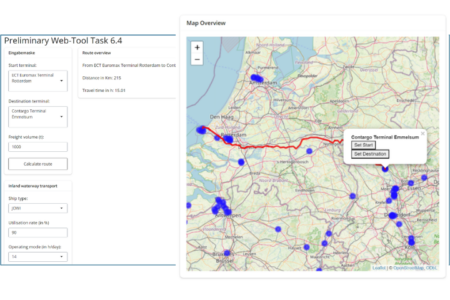
The development of the Energy Matching Tool (EMT) for the MAGPIE project presented a rich learning experience. Tasked with enabling peer-to-peer (P2P) energy sharing within the unique context of port communities, the project required navigating diverse business conditions, technical complexities, and user requirements. This article synthesises the most impactful lessons learned, focused on stakeholder understanding, data integration, interface design, optimisation strategy, and the definition of an effective P2P energy market logic.
Deep Understanding of Stakeholder Requirements and Port Context
Success depended on immersing ourselves in the real-world environment of ports and their business dynamics. Ports are complex ecosystems comprising a wide array of stakeholders, each with distinct business objectives, energy requirements, and consumption or production patterns. For example, port authorities, terminal operators, shipping companies, and logistics providers may all pursue different goals and face unique constraints – ranging from regulatory compliance and operational efficiency to economic incentives and sustainability targets. These varied drivers and limitations mean that energy needs within ports diverge significantly from those found in traditional urban or industrial settings.
Dialogue with key stakeholders – including port authorities, terminal operators, and industries – was critical to identifying not only functional requirements, but also contextual constraints and drivers. Understanding the port ecosystem in its fullness, with its diverse actors and dynamic interactions, allowed us to define EMT features that were both relevant and feasible. This holistic approach ensured the tool would support practical energy sharing initiatives within the MAGPIE framework, tailored to the complexities and realities of port communities.
Data Quality and Integration
Ports are data-rich, but integrating data from multiple sources posed challenges in consistency and reliability. Missing information, and heterogeneous formats often surfaced. Rigorous data validation procedures and early data profiling became essential. Investing in strong data integration infrastructure at the outset prevented downstream issues, enabling the EMT to deliver trustworthy and actionable insights.
The Importance of UX/UI in Tool Adoption
For the EMT to become a valuable daily tool for port community users, its interface needed to be intuitive and responsive. User experience (UX) and user interface (UI) design went beyond aesthetics – they were central to user trust and engagement. Iterative prototyping, gathering feedback from stakeholders, and continuous refinement led to an interface that met users where they were. Clear visualization of complex energy flows and market transactions proved especially important in the port context, where users have diverse technical backgrounds and time constraints.
Optimization Performance Through Suitable Algorithm Selection
One of the core technical challenges was selecting optimisation methods and algorithms that balanced accuracy, speed, and scalability. The complexity of P2P energy markets, with multiple actors and fluctuating demand/supply, required context-aware solutions. Crucially, the optimisation algorithm needed to ensure reliable convergence of solutions, so that the tool could consistently deliver actionable results within operational timeframes. Without robust convergence properties, solutions risked being unstable or incomplete, undermining both user trust and the practical utility of the EMT. We evaluated various optimisation strategies – ranging from linear programming to metaheuristics – before implementing a solution tailored to the evolving needs and resource constraints typical in port environments. Performance profiling was ongoing, as computational efficiency and convergence directly impacted the tool’s practical value and user satisfaction.
Defining a P2P Market Logic Tailored for Port Energy Communities
Unlike generic energy markets, a port community demands a P2P market logic that accounts for its unique operational rhythms and economic incentives. We learned that designing layered energy sharing mechanisms – where market logic was both economically effective and easily understood by participants – was vital. Transparent pricing models, clear rules for transaction validation, and incentives for participation all contributed to a market structure capable of driving energy sharing behaviour aligned with community goals. Aligning this logic with both port-specific business realities and regulatory requirements ensured long-term sustainability and adoption.
Conclusion
Developing the MAGPIE Energy Matching Tool underscored the importance of context-driven design and continuous stakeholder engagement. By focusing on the unique environment of ports, ensuring data quality, prioritizing user-centric interfaces, optimizing with the right algorithms, and crafting a market logic grounded in real-world economics, we delivered a tool with meaningful impact. These lessons offer a foundation for future projects aiming to enable smart energy sharing within complex, multifaceted communities like ports.